
From keeping up with constantly changing ESG reporting requirements to helping businesses turn sustainability strategies into meaningful action, no two days are quite the same for Positive Planet’s Principal ESG Consultant, Emma Gray.
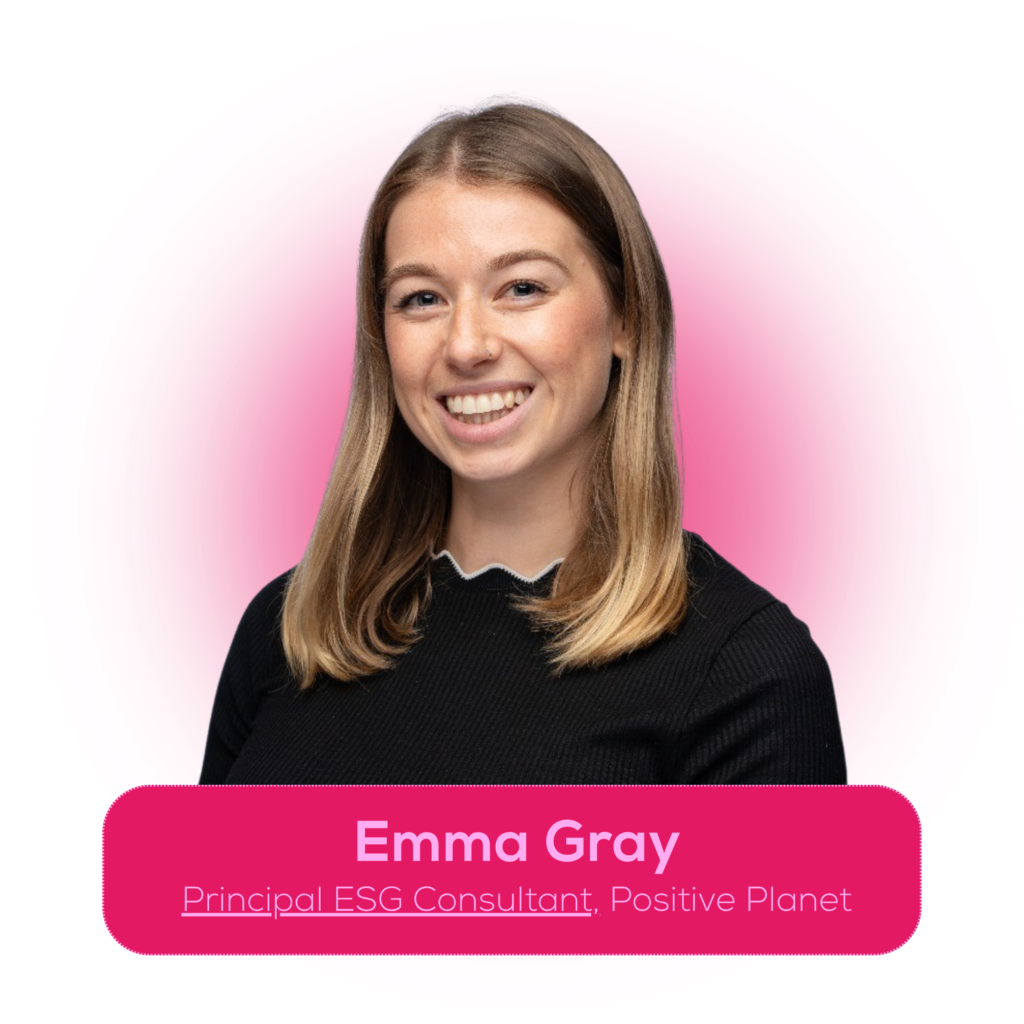
We caught up with Emma to find out what life as an ESG consultant really looks like, the challenges people might not see and why more businesses are choosing ongoing ESG support rather than treating sustainability as a one-off project.
What does an ESG Consultant do?
An ESG Consultant helps businesses understand, manage and improve their environmental, social and governance performance.
That can involve everything from identifying the ESG issues that matter most to a business, developing an ESG strategy and setting targets, through to supporting ESG reporting, stakeholder engagement and the implementation of long-term sustainability initiatives.
For Emma, the role is particularly varied.
“No two days are ever the same, and that’s one of the things I enjoy most about the job.”
What’s one thing that happens almost every day?
Team messages! Emma is regularly involved in conversations across the business, reflecting the collaborative nature of ESG consulting.
“I get messages from pretty much everyone in the business. It could be anything from a request to review a proposal, to redesigning one of our ESG products, and everything in between.”
As a Principal ESG Consultant, Emma’s role goes beyond working directly with clients. She also helps shape Positive Planet’s ESG services, supports colleagues across different areas of the business and brings her expertise into new opportunities and projects.
That variety means a typical day could include reviewing a client’s ESG strategy, discussing reporting requirements, responding to changes in sustainability legislation or helping develop a new ESG product.
What’s the trickiest part of your job that people might not guess?
Keeping up with changes in ESG reporting. The ESG landscape is constantly evolving. Regulations, reporting frameworks, standards and certifications can all change, while new guidance and expectations continue to emerge.
“Most people assume this information comes naturally from being in the industry, but there are so many regulations, frameworks, standards and certifications, and they all change constantly. I have to stay on top of all of that.”
This is one of the biggest challenges facing businesses too. Understanding which ESG frameworks and reporting requirements are relevant to your organisation can be complicated, particularly for companies operating across different markets or responding to increasing expectations from customers, investors and supply chain partners.
An important part of ESG consulting is therefore helping businesses cut through the noise.
“It is not about trying to do everything. It is about understanding what is relevant, identifying the issues that matter most to the organisation and creating a practical approach that supports both business and sustainability goals.”
What’s a small win recently?
Winning more ongoing ESG retainer work. For Emma, one of the most encouraging recent developments has been seeing more clients choose long-term ESG support.
“I’ve won a lot of retainer work in ESG. This is great news because it shows how clients want to move the dial on impact.”
A sustainability strategy should not be a document that is created, approved and then filed away. ESG priorities can change as a business grows, regulations develop and stakeholder expectations evolve.
Companies investing in ongoing ESG consultancy are often asking a much more valuable question: what’s next, and how do we do it?
“These companies won’t just file away their sustainability strategy and never look at it again. The companies that opt for retainers are engaged. They want to know what’s next and how they can keep moving forward.”
This shift towards ongoing support is important. Effective ESG management requires businesses to review progress, respond to new risks and opportunities, update priorities and continue embedding sustainability into decision-making.
If you could clear up one misconception people have about ESG consulting, what would it be?
That ESG and sustainability are not the same thing. While they overlap, ESG is a framework for understanding and reporting on environmental, social and governance factors, whereas sustainability is much broader and focuses on an organisation’s long-term impact and resilience.
“People seem to think I’m an expert in every sustainability topic going. ESG isn’t about knowing everything about everything; it’s about using the framework correctly to build a sustainable future”
ESG covers a huge range of environmental, social and governance topics. Depending on the organisation, this could include carbon emissions, climate risk, supply chains, employee engagement, diversity and inclusion, governance, sustainability reporting and much more.
No two businesses will have exactly the same priorities.
“It’s about helping clients understand the topics that are most important to them, set the right strategies and then report on the results.”
That is at the heart of effective ESG consulting. Rather than applying a generic sustainability checklist, the process should focus on understanding the business, its stakeholders and its most material issues.
From there, organisations can build an ESG strategy that is relevant, achievable and capable of delivering measurable progress.
What makes a good ESG strategy?
A good ESG strategy is not simply about having the right policies or publishing a report. It should help a business answer some fundamental questions:
- What environmental, social and governance issues matter most to us?
- Where are our biggest risks and opportunities?
- What do our stakeholders expect from us?
- What actions should we prioritise?
- How will we measure progress?
- How do we communicate and report on the results?
The answers will look different for every organisation. That is why businesses increasingly need ESG support that is tailored to their size, sector, goals and reporting requirements.
Looking beyond the strategy
For Emma, the most rewarding part of the role is helping businesses move from ambition to action.
A strategy is an important starting point, but meaningful ESG progress comes from what happens next: measuring performance, engaging the business and continually improving.
As the ESG landscape continues to develop, that ongoing support is becoming increasingly valuable.
The goal is not to action every sustainability topic. It is to understand what matters most, create the right strategy and keep asking: what’s next, and how do we do it?
Need support with your ESG strategy or reporting?
Positive Planet works with businesses to understand their ESG priorities, develop practical strategies, respond to reporting requirements and turn sustainability ambitions into measurable action.
Speak to our team to find out how our ESG consultants can support your business.