It’s easy to talk about climate change as something distant. Melting ice caps, disappearing rainforests, places most of us will never see. But nature loss is also happening closer than that. It’s happening in gardens, hedgerows, and riverbanks across the UK, including the ones near where we work and live.
Our Head of Sustainability, Bryony, has been seeing this first-hand. She spends time each week volunteering in nature recovery at Yorkshire Dales Wildlife Rescue, helping treat animals injured by the everyday effects of a changing climate and changing landscapes.
We sat down with Bryony to talk about what she’s learned, and what it means for how businesses think about their impact on the natural world.
What made you start volunteering at Yorkshire Dales Wildlife Rescue, and what does a typical volunteer shift look like?
I’ve always loved animals and nature, and after moving back home to Yorkshire, I jumped at the opportunity to work at the wildlife rescue. Working a desk-based sustainability job, it can be easy to lose perspective and forget why we do what we do. But working hands-on with the animals who are facing the effects of climate and environmental disruption head-on puts it all back into perspective.
A typical shift involves a lot of cleaning, feeding and watering, plus hands-on animal care, which at the moment means a lot of hand-feeding babies, removing ticks, and administering medication and fluids to poorly patients. We also deal with new animal admissions as they come in. I’m learning so much about our local environment and the challenges wildlife is facing and hope to turn this learning into positive action.
What’s the most common injury or illness you’re seeing in the animals that come in, and what’s actually causing it?
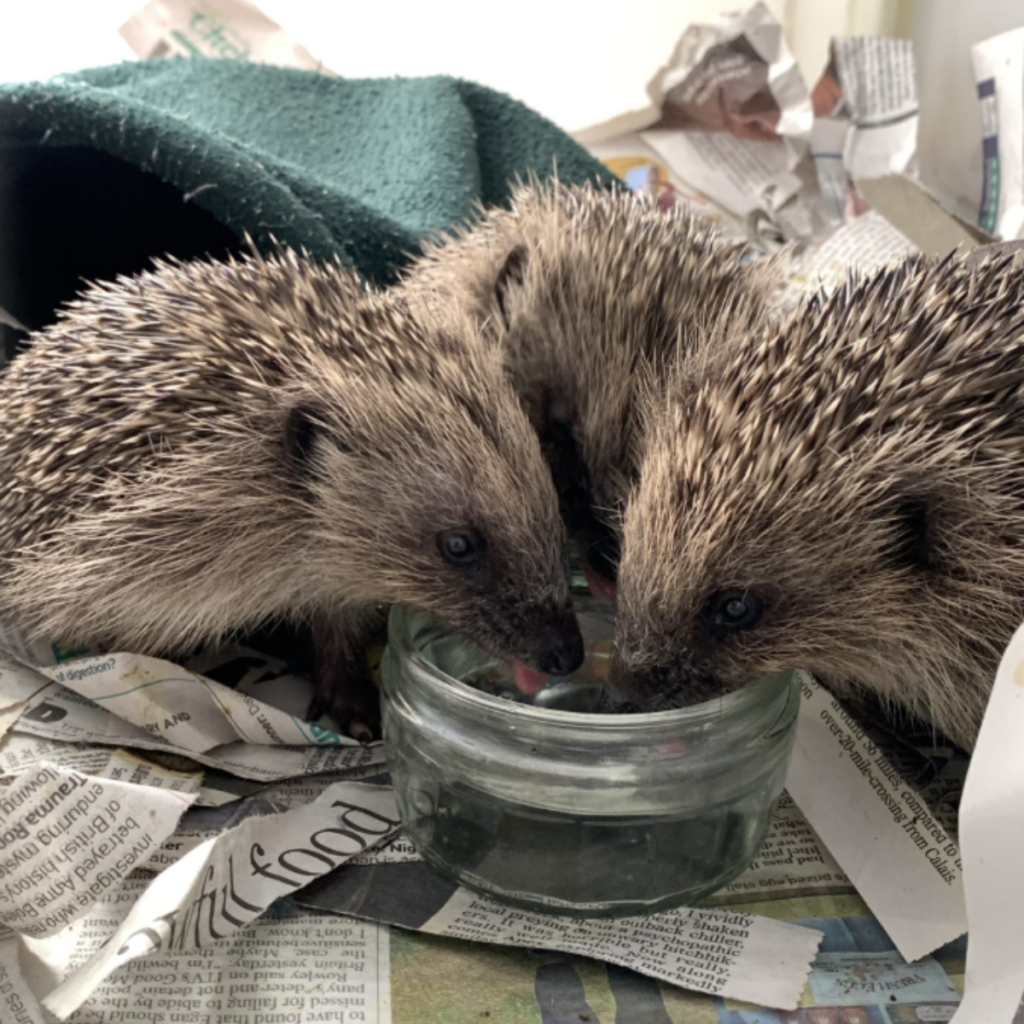
The recent prolonged heatwaves have really highlighted how quickly wildlife is affected by a changed environment. We have seen record numbers of animal admissions to the rescue, suffering from dehydration and hunger. We currently have over 90 hedgehogs in our care, many of them pregnant and lots of very sick hoglets. Soil is rock hard at the moment, making it nearly impossible for hedgehogs to dig for invertebrates, and slugs, snails and insects are diminished in numbers. We are seeing hedgehogs venturing out during the daytime out of desperation to try and forage and succumbing to the heat. Litters can be abandoned as starving mothers cannot produce milk or find enough food even to sustain themselves. In these conditions, hedgehogs succumb to flystrike, maggots, ticks and internal parasites easily.
It isn’t only hedgehogs affected. We have 25 owls, a curlew, oystercatcher, buzzard, cygnet, polecat, many ducklings, garden birds, and a fawn, to name a few, all being impacted to different extents by a changing environment.
Has anything you’ve seen at the rescue centre surprised you, even with your sustainability background?
It’s all surprised me. I’ve come across native species I’d never heard of before, including a merganser and a ‘little owl’ (it’s not just a small owl), and learned so many new facts about the animals. I’m not surprised that a changing climate is affecting our wildlife, but the extent to which it so acutely and negatively impacts them is shocking.
Whilst humans are off enjoying the heatwave in a pub garden or by a lake, animals have far fewer options, and I feel we have a moral duty to protect their habitats and help them adapt. I’ve also got a new appreciation for the incredible people who dedicate a huge amount of their time to the rescue and our local wildlife – it is very (rewarding) hard work!
You’ve talked about running out of wild spaces to release animals back into. Can you say more about that?
It’s an amazing feeling when we bring an animal back to good health, and it’s ready for release, but then we have the secondary challenge of where to release them. Often they go back to where we found them if suitable, but we’re running out of wild and safe spaces to do so.
We’re increasingly paving over gardens, replacing them with plastic lawns, chopping down trees, and building physical barriers like fences and buildings. There are many risks to wildlife in more urban areas, such as falling down drainage grates, being hit by vehicles, or becoming prey to pets.
Hedgehogs in particular are also at high risk from strimmers and mowers, and increased litter poses an entanglement or injury risk for all animals. Dry conditions also bring a wildfire risk, which both kills animals and destroys their habitats, shrinking the pool of suitable release sites still further. It’s a difficult job trying to find a suitable environment!
How does what you’re seeing on the ground connect to the work you do
with clients at Positive Planet?
The two are very interconnected. The wildlife rescue work brings to life the physical impacts of climate disruption at a hyper-local scale, and I’d urge everyone to get involved with their local wildlife rescue to understand this. It’s easy, as individuals and businesses, to see Net Zero and sustainability as a tick-box exercise with no real understanding of the tangible impacts of climate disruption.
In practice, this shows up in very concrete ways for the businesses we work with. Land used for a new site or car park is land no longer available as habitat. Water drawn from local sources for manufacturing processes is water that isn’t recharging the rivers and wetlands nearby. Raw materials sourced through a supply chain, whether timber, minerals or agricultural produce, often carry a hidden nature footprint at the point of extraction or farming, long before they reach a UK factory or warehouse.
We see climate disruption as a distant problem affecting other countries, but the reality is that nowhere is immune, as has become particularly apparent in the UK heat recently! We will all need to adapt and work collaboratively to prevent the worst effects.
If a manufacturing, construction, or logistics business wanted to take nature recovery seriously, where would you tell them to start?
Unsurprisingly, get involved with your local wildlife rescue. We’ve been desperate for help to construct aviaries and help with building maintenance and repair. Arrange a volunteering day for your team, host a fundraiser or donation collection. Any amount of support helps.
Of course, keep track of the great work you’re doing and use the facts, figures and images in your annual Impact Report. And if you want to really understand the nature impacts your business has, an ESG assessment is a practical starting point for identifying where land, water, materials and supply chains intersect with nature loss. It’s also worth being aware of corporate frameworks such as the Taskforce on Nature-related Financial Disclosures (TNFD) and Science Based Targets Network (SBTN), which are increasingly used to assess and report on nature-related risks and dependencies.
Is there a small, practical thing businesses or individuals could do that would make a real difference to local wildlife?
Do your research and review resources from wildlife authorities. Easy things you can do at home: rewild your garden, plant shaded trees and bushes, avoid mowing or strimming (particularly in spring), fit a hedgehog highway door to your garden, leave out a shallow dish of water in the shade, monitor wildlife in your garden, litter pick, and educate others. Businesses can do much the same on their grounds or in their local community. But the largest impact may come from engaging their teams through a volunteering day, bringing everything into perspective for people.
What would you want people to take away from your experience at the
rescue centre?
The negative effects of climate disruption are much closer to home and more acute than is immediately obvious. Do your research, get involved in local groups, and do what you can as a responsible business to support the incredible organisations on the ground, facing the brunt of these challenges.
What would you want people to take away from your experience at the
rescue centre?
The negative effects of climate disruption are much closer to home and more acute than is immediately obvious. Do your research, get involved in local groups, and do what you can as a responsible business to support the incredible organisations on the ground, facing the brunt of these challenges.
Nature recovery and climate action often are treated as separate conversations, one for scientists and campaigners, the other for boardrooms and balance sheets.
The businesses making the most progress aren’t waiting for a perfect strategy. They’re starting by understanding where their operations touch the natural world, through land, water, materials, and the supply chains behind them, and building from there.
You don’t have to volunteer at a wildlife rescue centre to start that conversation, or to see that in practice. But it helps to remember that nature recovery isn’t abstract.
If you want help understanding where your business fits into that picture, we’re happy to talk it through. Book a call with us here.
Positive Planet is currently raising funds for the Yorkshire Dales Wildlife Rescue, and we are encouraging clients, partners, or anyone to get involved! If you would like to donate, however small, you can do so at Yorkshire Dales Wildlife Rescue – JustGiving.